The AHS Blog

Christiaan Huygens on a shop front in Amsterdam
This post was written by by Stefanie van den Steen
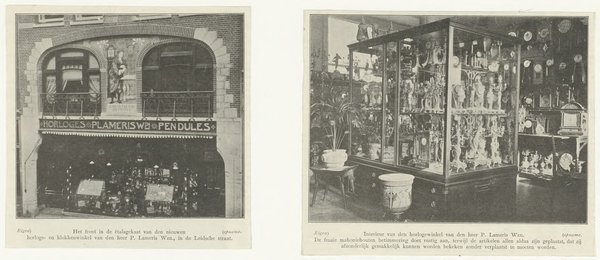
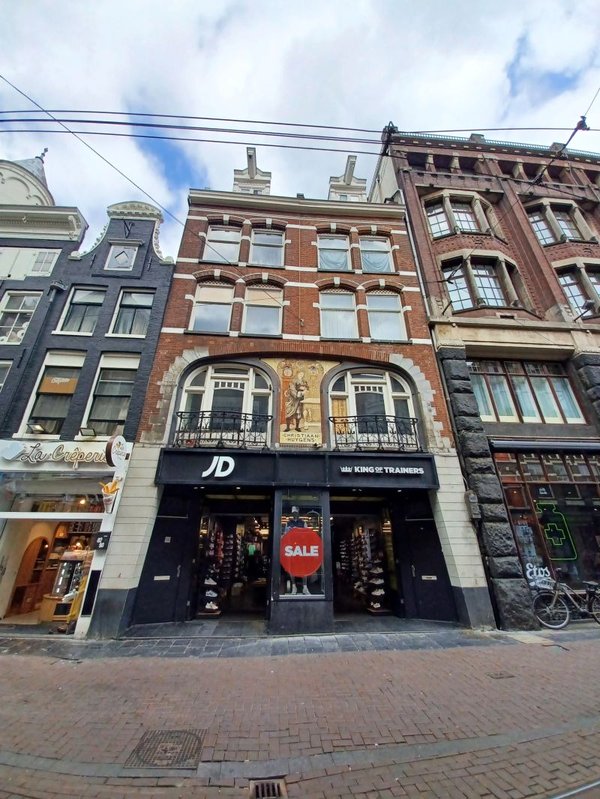
In 1892, the Dutchman Pieter Laméris (1868–1958), a native of Oude Pekela in the province of Groningen, opened a clock and watches shop in Amsterdam at the address Leidsestraat 81. A few years later, he moved to number 86, which also served as his residence. In 1903, he had the shopfronts at numbers 86 and 88 merged into a single modern shopfront with a bluestone façade and a wide display window, behind which he could display his wares. Contemporary photos show the shopfront and the interior.
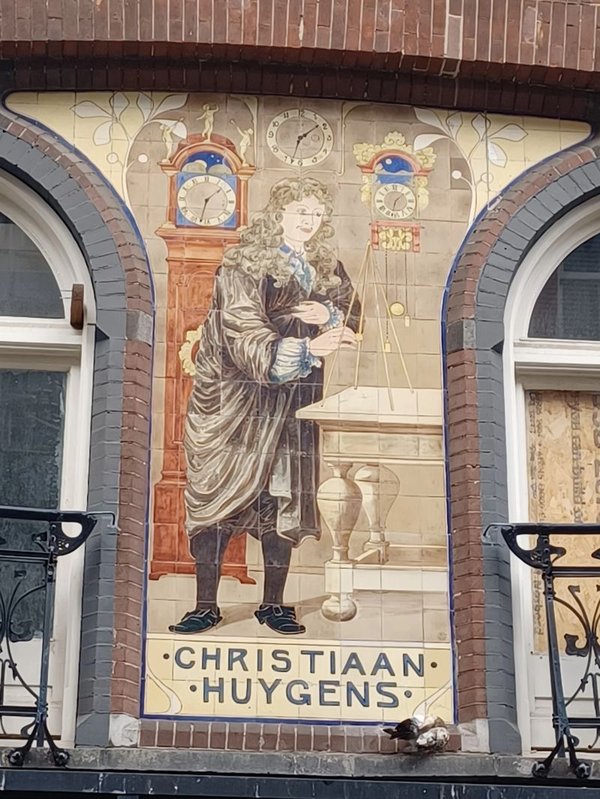
Laméris commissioned a remarkable tile panel as an advertisement for his business: an image of Christiaan Huygens, the inventor of the pendulum clock. It was manufactured by the Utrecht-based faience and tile factory ‘Holland’, whose goods were also available in the shop.
In 1923, the business moved away and the premises were used by other shops. In 1953 the mural was covered up, and it remained out of the public eye until 1991 when it was uncovered again. Some tiles had gone missing, others were in danger of coming loose.
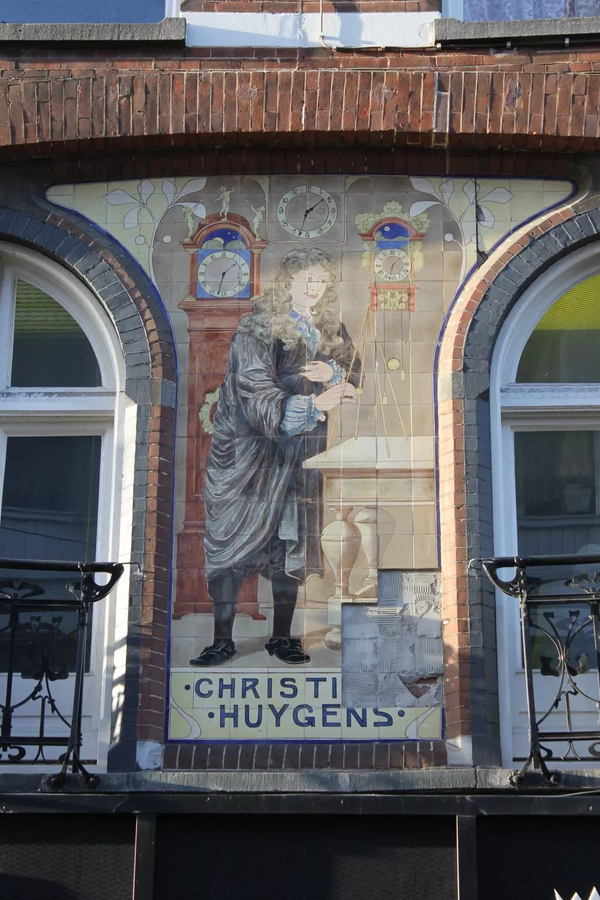
In 2020, the Dutch Tile Museum in Otterlo announced that it was imperative to undertake restoration, and the heritage association ‘Heemschut’ also urged action. With financial support of the City of Amsterdam and of Heemschut, the missing and damaged tiles were recreated by Michiel Overhoff and installed by the firm Van Sabben Oud-Nederlandsche Tegelwerken in Oud-Beijerland. Since 2023, passers by can enjoy the fine panel again, although it is no longer related to the goods sold in the shop beneath it.
A different kind of memento
This post was written by Tabea Rude
Memento mori watches are well known, with depictions of such timepieces standing for our decay and eventual departure from the world of the living. We may also know of, or even own, a watch or clock that serves as a memento, souvenir or keepsake, reminding us of a milestone, special occasion or a person.
Recently I came across a third type of memento, incorporated as a complication or additional function in a watch. This kind could be considered to serve like a knot in a handkerchief; a tool to be reminded of a future appointment or meeting.
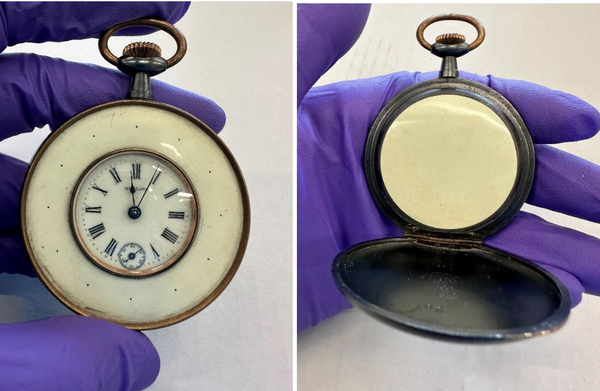
The idea is very simple: The pocket watch is equipped with an additional flat frame made of enamel around the dial, along with a couple of pencils on the chain. The owner can add their appointments or reminders to the corresponding hour numerals and wipe the enamel ring clean once the appointments are over. Like a miniature, round calendar that has to be rewritten every twelve hours.
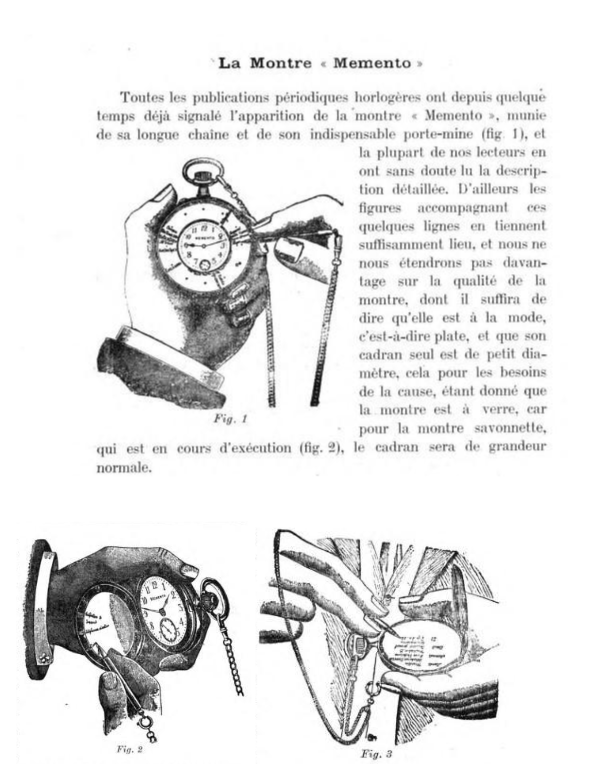
The watch was published with drawings and descriptions in most German-speaking horological journals, as well as some French-speaking Swiss ones, and the company Didisheim-Goldschmidt in La Chaux-de-Fonds really thought they had hit a goldmine. A savonette version was also planned, however nothing appears to have been reported after this first great announcement. Evidently this watch never took off and I wondered whether similar ideas ever were a thing.
A watch that required less effort but one that risked forgetting what exactly had to be remembered, was an invention described in 1890. A report in the Deutsche Uhrmacherzeitung on the Paris World Exhibition mentioned a Swiss watch with a memento function. In this particular watch a pansy appears for the set date and hour in a little aperture on the dial. Once the date changes, the pansy disappears. The French for ‘pansy’ is ‘pensée’, which along with the flower also means thought, reflection and opinion.
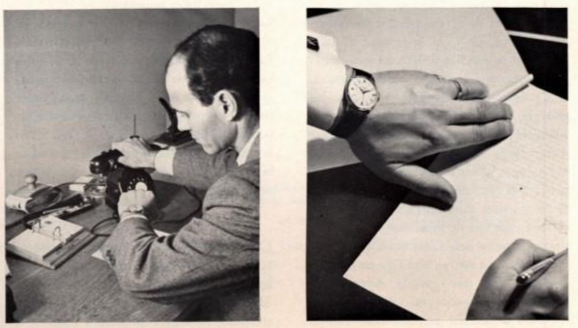
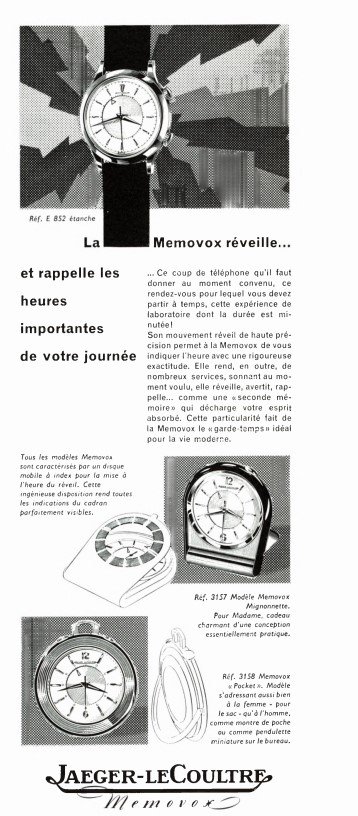
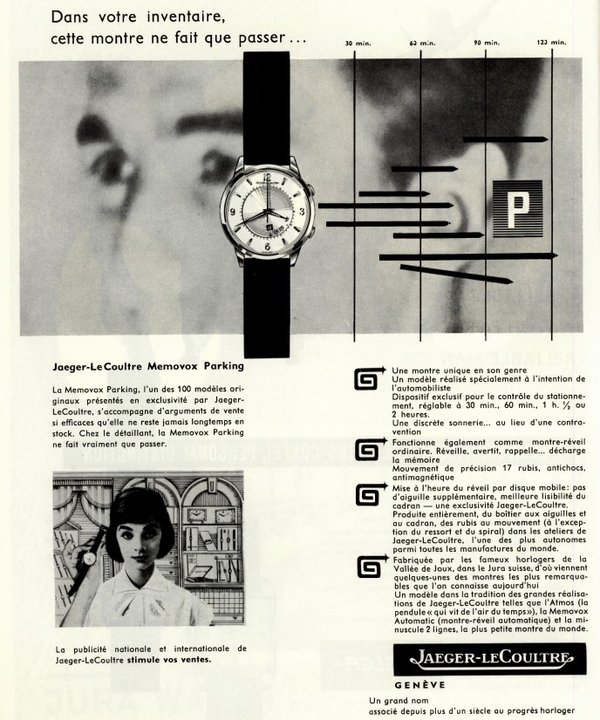
Going back to the roots of an ordinary alarm function are more recent inventions, such as the Jaeger LeCoultre Memovox, a wristwatch incorporating an alarm with two different volumes, conveniently created by the fact that the case functions as resonator. A loud sound created by the watch being situated on a table for the morning and a discrete sound created because the watch sits on the wrist for the busy businessperson during the day. The same company also offered desk clock versions as well as the Memovox Parking, a wristwatch for car owners which reminded the wearer when the time on the parking meter had run out.