The AHS Blog
Spandrels as religious networking
This post was written by Matthew Read and Rachel Wicaksono
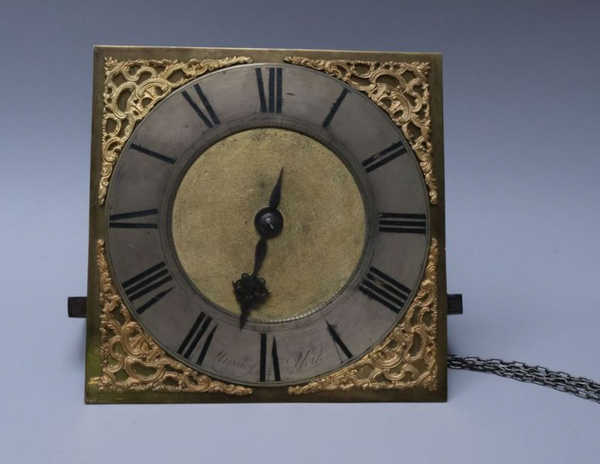
In July 2026 we bought a 30-hour-duration clock movement, hand, dial and seatboard from an internet auction site, signed on the chapter-ring ‘Hindley York’.
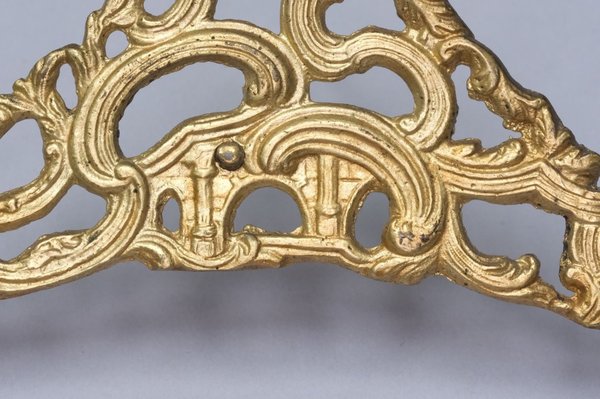
As the clock sat for a few days on our kitchen counter-top, we noticed something unusual about the seemingly run-of-the-mill eighteenth-century spandrels cast in brass. Integrated into the typical scrolling Rocaille was something architectural, a trio of arches and what appeared to be two Corinthian-order fluted columns.
The maker of the clock, Henry Hindley (1701–1771), came to York, from Wigan in Lancashire, in 1731. We speculate that his move was motivated – at least in part – by the opportunity for his daughter to be educated as a day pupil at The Bar Convent, only the second school for girls in England. The Bar Convent, built just outside the City walls, by Micklegate Bar, in 1686, was founded at a time when practising Catholicism publicly was severely penalised and Catholics were banned from public office, education, and land ownership.
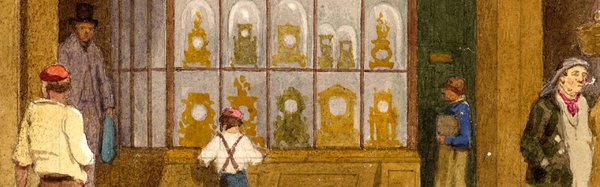
The nuns, who presented in public as ‘widows’, were a frequent target of discrimination. The convent came under attack on a number of occasions, including in 1696, when it took a sighting of St Michael riding a horse to disperse the angry mob. A later attack, aimed at shutting the convent down and sending the school children home, was led by Dr. Jacques Sterne, Precentor of York Minster, and Archdeacon of Cleveland 1730–1750.
Despite these challenges, the convent continued to thrive and, in 1769, a chapel, with a Roman-style dome designed to be invisible from the street, was added to the Convent by Catholic architect, Thomas Atkinson.
In York, Hindley gained his Freedom of the City, allowing him to trade within the city walls, in exchange for two longcase clocks, still on display in the Mansion House. He grew an enviable client list of wealthy Catholic families, made a turret clock for the Bar Convent, and was able to navigate local politics sufficiently successfully to be commissioned to make several clocks for York Minster and other non-Catholic clients.
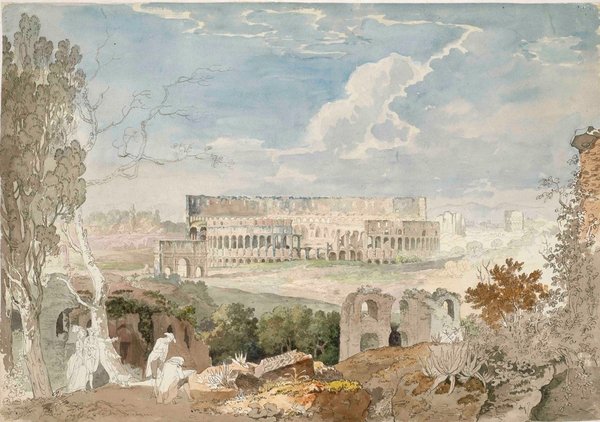
The three arches and two columns incorporated into the spandrels of the clock sitting on our kitchen counter could have been a local reference, perhaps to a Bar in the City Walls. But an AI-assisted search pointed to a much more interesting source of inspiration: The Arch of Constantine, the largest triumphal arch in Rome, commissioned in 312, the year that the Emperor entered the city.
The Arch commemorates the victory of Constantine over Maxentius at the Battle of the Milvian Bridge, an event that came to represent the end of paganism in Rome and the beginning of state-backed Christianity. The Arch is clearly visible from the gardens of the Catholic Venerable English College, an endowed hospice, or safe refuge, for pilgrims from England, founded in 1362. The Arch must have been included in many a Grand Tour sketch of the Colosseum by English travellers resident in the College and is also, most famously, the subject of a series of works painted in London between 1742 and 1745 by Canaletto.
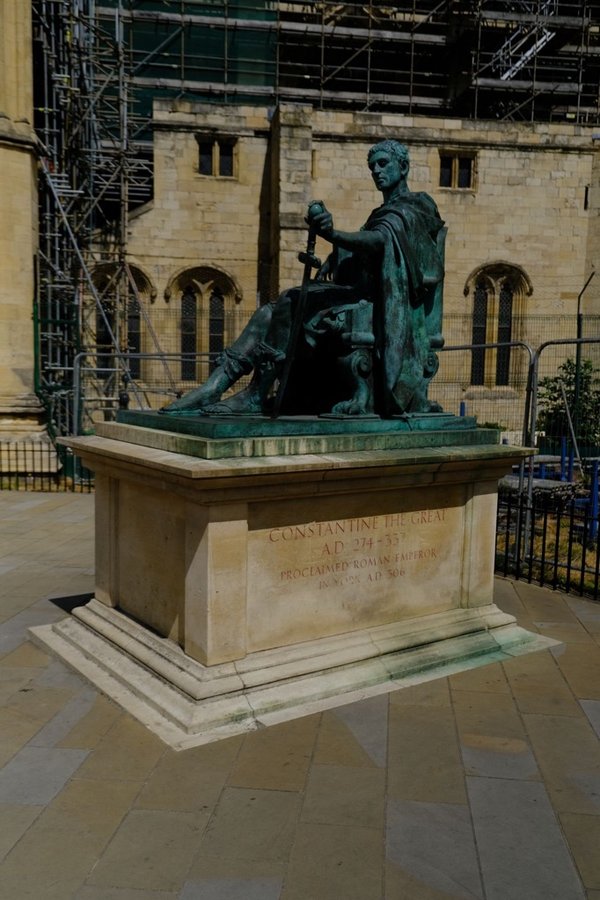
So, why would the Arch of Constantine appear in Hindley’s spandrels? While much more research is needed into the networks of Catholic makers and their clients in Yorkshire, looking at the clock in our kitchen in York, the city in which Constantine was crowned as Emperor in 306, we speculated that the image of the triumphal arch sends a discreet but powerful message about the very beginnings of state-supported Christianity and the unbroken connection between the practice of Catholicism in York and one of the founders of the faith.
Given the dangers of publicly identifying as a Catholic when the spandrels were cast, the message is one that is sufficiently hidden in the overall design as to be unnoticed by the casual observer, and yet sufficiently visible to be recognisable by those in the know.
Like St. Michael, who appeared when needed, or like a chalice that is designed to be quickly disassembled into several parts, or an invisible chapel, the spandrels send a message of authenticity, longevity, and encouragement.
Then, as now, networks, visible and invisible, underpin both business, and the business of faith.