The first watch with no balance
This post was written by Giovanni Colacicco
The miniaturisation of watch components, whether to improve portability or to accommodate additional complications within a movement, has been a constant driving force in the evolution of horology. In the 1950s, however, a fundamentally new approach to optimisation emerged: the replacement of the mainspring as an energy source with electrical current supplied by a battery.
The first electromechanical wristwatch calibre presented in March 1952 by the French firm Lip, in collaboration with the American company Elgin, was largely overlooked by the Swiss watch industry and regarded more as a technical curiosity than as a serious advancement.
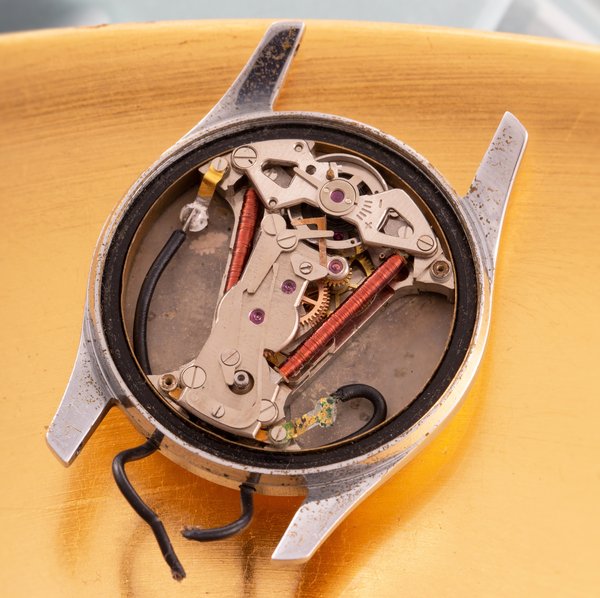
This perception changed with the work of Max Hetzel (link in French), a Swiss engineer employed by the American firm Bulova. Initially tasked with improving the automation of mechanical movement production, Hetzel was subsequently asked to conduct a comprehensive review of new patents relating to electromechanical systems, with the aim of enabling Bulova to enter the emerging market of battery-powered wristwatches.
Hetzel’s analysis led him to a decisive conclusion: despite their electrical energy source, conventional electromechanical watches would offer no significant improvement in precision over traditional mechanical watches. Both relied on a balance oscillating at approximately 2.5Hz, and it is the frequency of the regulating organ that fundamentally determines a watch’s accuracy. He therefore proposed abandoning the balance altogether in favour of a regulator capable of operating at a significantly higher frequency.
Having previously written his diploma thesis on the electromechanical frequency filters for telegraph transmission channels at the Swiss Federal Engineering School (ETH Zurich), Hetzel was uniquely positioned to pursue this concept. He developed a battery-powered caliber incorporating a miniaturised metal tuning fork vibrating at 360Hz as its regulating organ. The Swiss patent (CH312290) for this system, later commercialised as the Accutron (from “Accuracy” and “Electronic”), was granted in June 1953, and the watch, incorporating caliber 214, was successfully introduced to the market in October 1960.
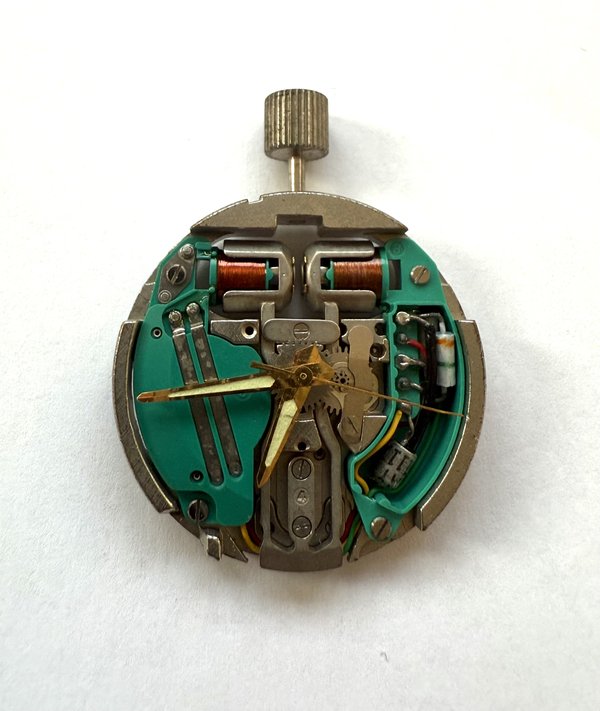
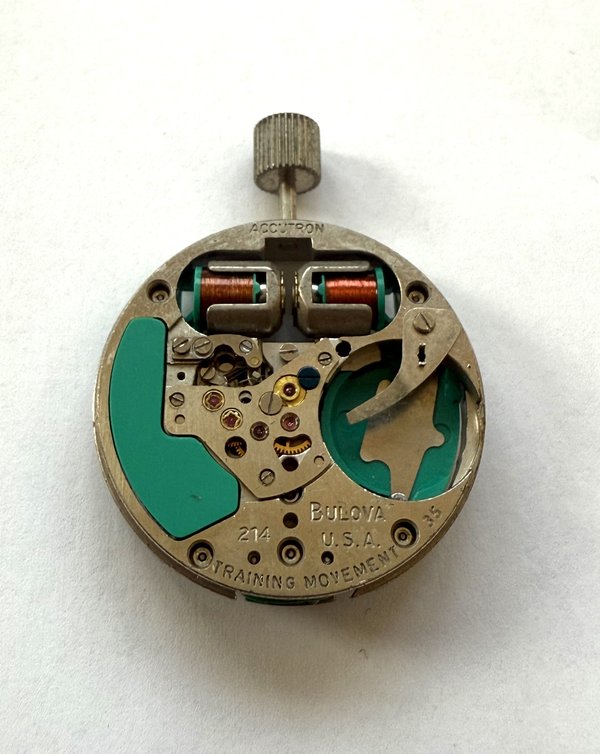
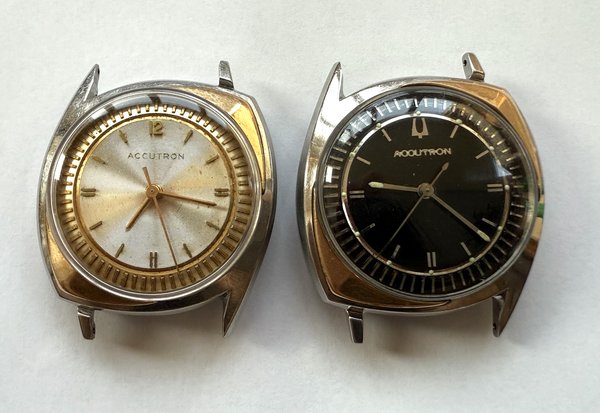
The Accutron became the first wristwatch to operate without a balance, marking a profound break with more than three centuries of horological tradition.
More information on the history of Swiss electric and electronic watch development can be found at the author's website, Electric Watch Prototypes.